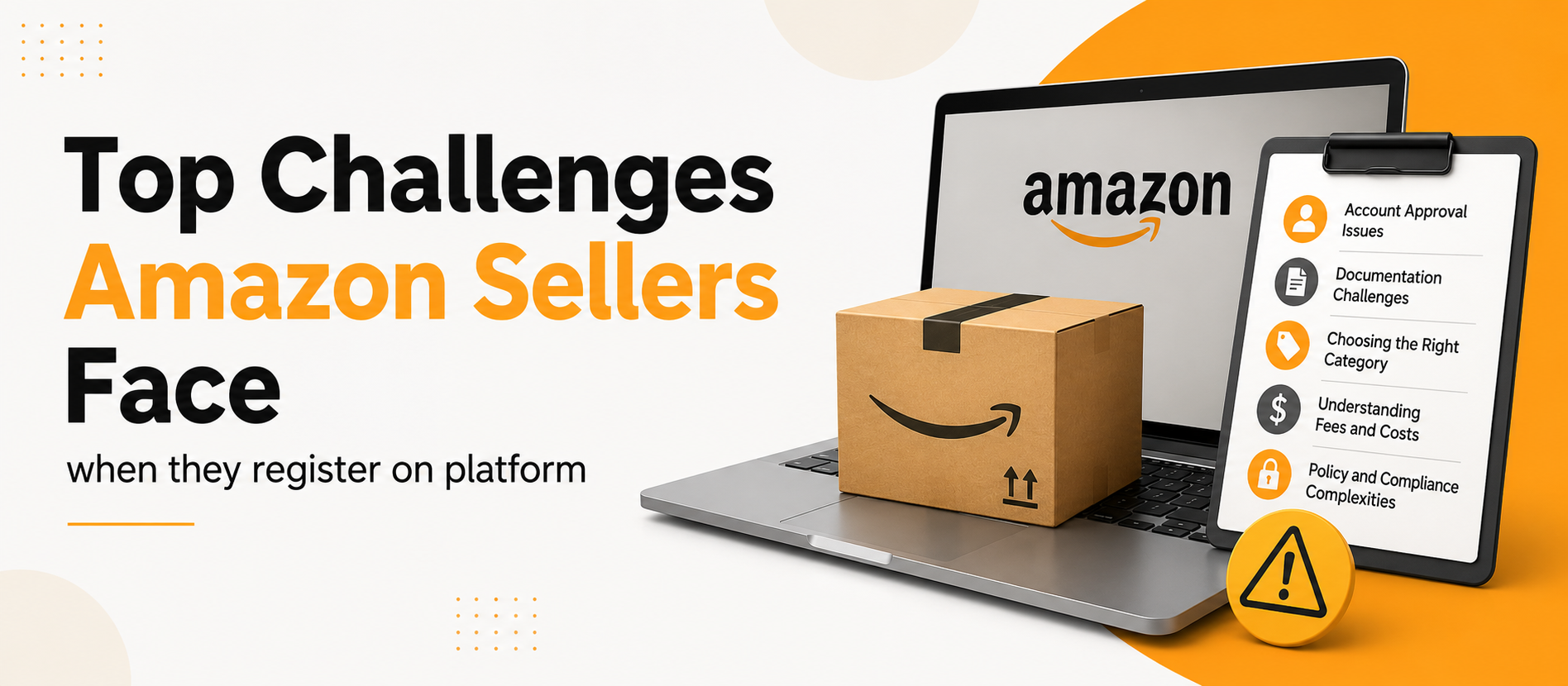


Starting on Amazon can be profitable, but it comes with its own challenges. While it may seem simple from the outside, once you understand FBA fees, inventory planning, and policy violations, all of which can make or break your business.
Amazon has approximately 300 million active customer accounts. If you want to sell on Amazon, you should be aware of the challenges you may face during the process.
In this blog, we will explore common challenges Amazon sellers face and share the actionable strategies to overcome them.
Identity Verification
The Amazon identity verification process is really tough and can take 2–7 business days. This delay can be frustrating. But to ensure a smooth verification process, sellers must keep a few things in mind. The common culprits of mismatched identity include:
Name Mismatches
Cropped or low-resolution scans
Outdated Documents
Solution
Ensure the name on your ID matches your Seller Central registration exactly.
Use a high-quality, clear image to avoid any kind of rejection or disapproval.
Check that all the documents, like the bank statement, aren’t older than 180 days.
Dealing With Product Returns
While online platforms allow customers to return their products, and that too with flexibility. However, returning products without a valid reason can be challenging for store owners. If product returns are excessive, businesses can face a negative impact on profit margins.
Common Return-Related Challenges
Inventory management issues
Customer Satisfaction Risks
Increased Operational Costs
Fraudulent Returns
To help reduce the number of your product returns, you can follow these tips:
Improve Product Listings
Ensure your product meets the quality standards
Address customer questions before and after purchase
Identify return reasons to make improvements
Understanding Amazon Fees
Most sellers feel confused because selling on Amazon involves various fees. While the platform has many benefits, the costs can sometimes significantly affect profitability if not properly accounted for. Typical fees charged by Amazon include referral fees, fulfillment fees, storage fees, advertising costs, and return processing fees. Understanding this cost structure is important before launching any product.
Understanding Amazon Policies
Amazon has strict policies, and every seller should comply with them. Amazon policies are complicated, and new sellers often struggle to understand them. For every new seller, it's important to familiarize themselves with the policies. Amazon is a trustworthy marketplace, and unexpected violations can lead to negative consequences, such as removals, account warnings, or suspension.
Key policy areas of Amazon include the following:
Product listing guidelines
Restricted product list
Pricing Rules
Customer Service Standards
Category and Product Approvals Hurdles
The most common and prominent challenges sellers face, even after account activation, are category and product approval hurdles. Some categories of products, like beauty, supplements, and jewellery, require additional approval before you can sell them.
Understanding which category of products needs approval can help you plan your inventory effectively.
Common challenges that most sellers face
Uncertainty about the category of products
Regional Limitations
Safety Concerns
Difficulty in providing the required documents
Tips for Faster Category Approval
Source products from authorised sellers
Keep the invoices for recent purchases
Ensure the business information matches your registration process
Upload high-quality and complete documentation
6. Advertising & PPC Complexity
Most sellers struggle to get noticed on Amazon, which is why they turn to advertising. With millions of sellers on Amazon, it's hard to get enough organic visibility. Amazon Pay-Per-Click (PPC) advertising allows sellers to attract the attention of potential customers and earn profits. For new sellers, the Amazon advertising platform can be overwhelming as they find difficulty in understanding the right campaign type, bids, and budgets.
Best tips for Amazon PPC success
Start with a modest daily budget and scale gradually
Optimize your product listings
Use high-quality images and convincing product descriptions
Test different keyword strategies and match types
7. Maintaining Stronger Seller Performance Metrics
To continue selling on Amazon, successful sellers must continuously meet the performance standards. Amazon continues to monitor sellers' metrics through metrics like order defect rate (ODR), late shipment rate, cancellation rate, and customer feedback scores.
Common challenges new sellers face:
Delayed order processing
Poor customer communication
Slow response to buyer messages
Poor customer communication
Best Practices for Maintaining Stronger Performance
Respond to customers' queries promptly
Regularly check your account health dashboard
Continue reviewing customers' feedback to make improvements
Handle returns and refunds fairly
Maintain sufficient inventory to prevent stockouts
Conclusion
Amazon sellers face several unique challenges when registering on the Amazon platform. Building long-term success on Amazon takes time. Even Amazon can be challenging for beginners, but the good news is that most challenges can be overcome through preparation and continuous learning. Additionally, with the assistance of an expert Amazon seller, a central account manager like Parkhya Solutions can handle things more easily and better.
FAQs
Why did Amazon cancel the seller registration applications?
Amazon may reject seller applications if documents are incomplete, expired, or contain inconsistent information.
How long does Amazon seller registration usually take?
Amazon seller registration usually takes a few hours to 24 hours. However, some business accounts that need manual review can take 48-72 hours.
Can I sell internationally with one Amazon seller account?
Yes, you can sell internationally with one Amazon seller account. However, you need to comply with each country’s tax regulations and marketplace policies.
How can new sellers improve their chances of success on Amazon?
Success on Amazon starts with proper preparation. Ensure your registration documents are accurate, understand Amazon's policies, optimize your product listings, invest in strategic advertising, monitor performance metrics, and continuously improve your customer experience. A well-planned approach lays the foundation for long-term growth and profitability.
Can I switch from an individual to a professional seller account later?
Yes. You can switch between plans inside Seller Central without closing your account.